Duluth Summer Humidity and Mold: Why Fast Drying Matters
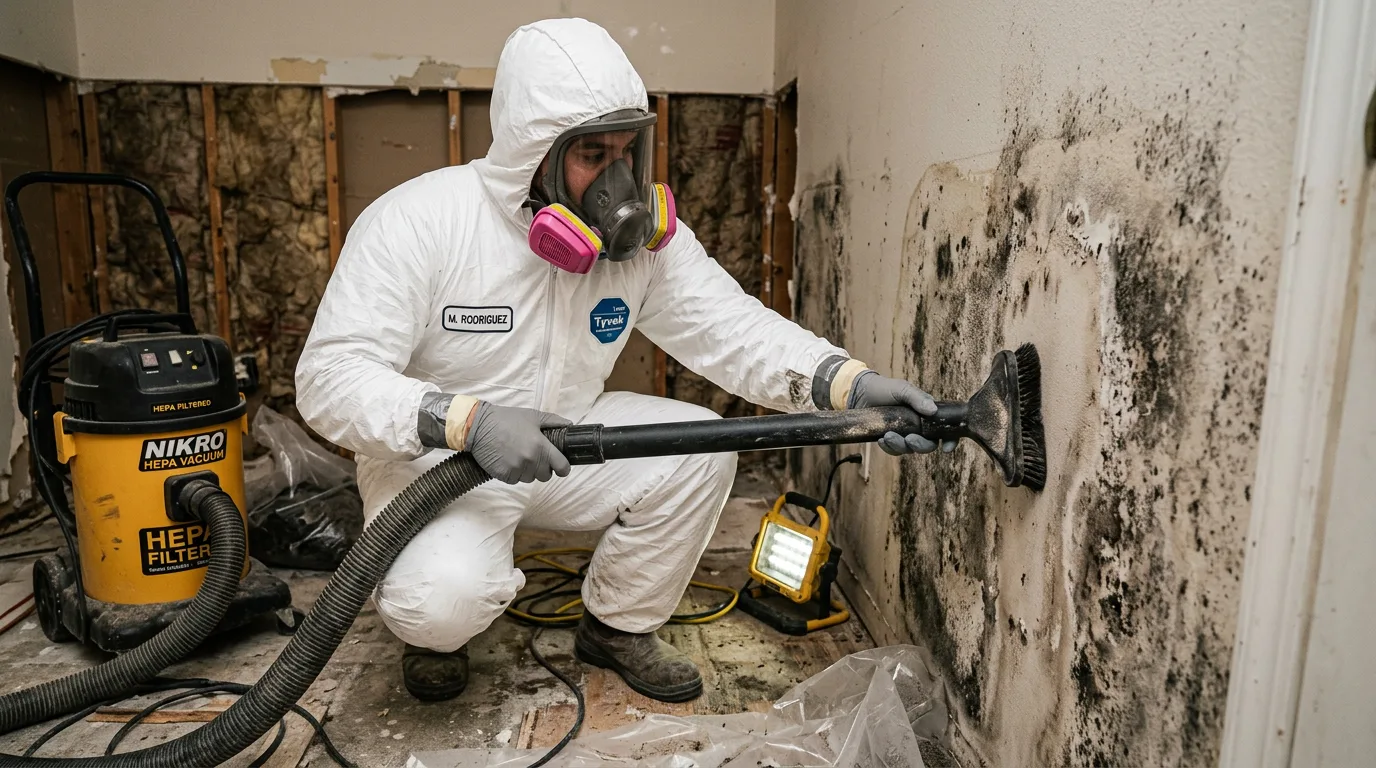
Between June and August in Duluth, GA, the air itself becomes a mold incubator. Dew points regularly exceed 65°F — a threshold at which outdoor mold spore counts spike and indoor surfaces that are even slightly above ambient moisture content begin to support colonization. If you’ve had any water event in your Duluth home this summer and you’re wondering whether you really need professional drying, this post answers that question with the data. We cover why Georgia summers are uniquely hazardous for post-water-event mold, what the actual timeline looks like, and what proper dehumidification requires in this climate.
Water Event in Your Duluth Home? Call (877) 698-1311
Fast drying is essential in Duluth's summer climate. We deploy immediately to prevent mold colonization.
Why Duluth’s Summer Climate Creates Ideal Mold Conditions After Water Events
Duluth sits in a humid subtropical climate that receives approximately 54 inches of rain annually, with June through August being the peak period for both rainfall and ambient humidity. During these months, outdoor relative humidity regularly exceeds 80% through morning hours, and dew points that feel oppressive to residents also happen to be exactly what mold spores need to germinate and grow.
Mold requires three conditions to colonize a surface: a food source (organic material — wood, drywall paper, cardboard), moisture above about 60% relative humidity sustained at the surface level, and temperatures between 40°F and 100°F. During Duluth’s summers, two of those three conditions exist permanently in any home. Any moisture event that introduces the third — elevated surface moisture — completes the triangle. Homes in the Sweetbottom Plantation area and throughout Downtown Duluth’s older housing stock, where wall assemblies may have limited vapor barrier protection, are especially susceptible because summer humidity penetrates wall cavities more readily in older construction.
The Actual Mold Growth Timeline in Duluth’s Summer Climate
The 24–48 hour mold window that restoration professionals reference is a national industry guideline. In Duluth’s summer conditions, the effective window is often shorter.
0–12 hours post-water event: Surfaces are wet. Mold spores in the ambient air — always present outdoors and naturally infiltrating any home — land on wet surfaces but haven’t yet germinated. This is the window when professional extraction and drying setup can prevent mold almost entirely.
12–24 hours: Mold spore germination begins on wet organic surfaces with surface temperature above 68°F. During Duluth’s July and August, indoor temperatures without air conditioning can reach 85°F+. At these temperatures, germination accelerates.
24–48 hours: Visible mold mycelium may begin to appear as white or gray fuzz on wet drywall paper, carpet backing, and wood framing. At this stage, the mold is still in early colonization and professional remediation can stop it with minimal material removal.
48–72 hours: Established mold colonies begin producing spores, spreading to additional surfaces. The remediation scope grows significantly. In Duluth’s summer humidity, this timeline can compress further in basements and crawlspaces where airflow is limited.
Beyond 72 hours: Full mold remediation is required. What could have been a drying job becomes a mold remediation project. Material removal — drywall, insulation, carpet — becomes necessary where it would not have been needed with prompt extraction and structural drying.
24/7 Emergency Mold Prevention in Duluth
Call Duluth Water Damage Restoration at (877) 698-1311. We stop mold before it starts with industrial-grade drying.
What Proper Structural Drying Requires in Georgia’s Climate
This is where the difference between professional restoration and DIY becomes stark. A box fan placed in a wet room evaporates water from the surface — it does not remove moisture from the room. The surface may feel dry while the interior of drywall, subfloor plywood, and wall insulation remains saturated. Ambient humidity in a Duluth summer home in June means that even evaporated surface moisture stays in the room’s air, re-absorbing into structural materials overnight.
Professional structural drying uses two tools working together: air movers (high-velocity fans positioned at floor level, designed to evaporate moisture from structural materials) and LGR dehumidifiers (low-grain refrigerant commercial units that actively extract water vapor from the room air). A commercial LGR dehumidifier removes 80–100 pints of water per day from indoor air. A standard home dehumidifier removes 30–50 pints. For a 500-square-foot flooded basement in Duluth’s summer humidity, a professional setup may deploy 3–5 air movers and 2 commercial dehumidifiers running 24 hours a day for 3–5 days.
Dehumidification is monitored with calibrated moisture meters at multiple points in the structural assembly — checking drywall paper, subfloor, and wall framing independently. Each material has a target moisture content; only when all targets are reached is the drying considered complete. This monitoring is documented in daily moisture logs that serve as evidence for your insurance claim.
How Gwinnett County’s Housing Stock Affects Summer Drying Challenges
The age and construction type of your home directly affects how long drying takes. Homes throughout the older sections of Duluth — built before modern vapor barriers and engineered wood products were standard — often have denser, less permeable wall assemblies that take longer to dry. Homes with original hardwood floors over plank subfloor hold moisture in multiple layers that must all be dried simultaneously. Homes with blown cellulose insulation in walls retain moisture longer than fiberglass batts.
Newer homes in developments near Peachtree Corners and the Suwanee corridor generally have engineered lumber and OSB subfloors that dry faster than solid wood but are also more susceptible to swelling and delamination if wet for more than 48 hours. Regardless of construction type, the Gwinnett County summer humidity environment means that drying must be actively managed — passive drying is insufficient in this climate.
Cost Factors for Summer Water Events in Duluth
Water mitigation costs in Duluth GA average $2,258–$2,321 for a typical residential event, with the range running $1,361–$6,270 depending on scope. Summer water events frequently cost more than winter events because the mold risk accelerates the timeline pressure: what might be a 5-day drying job in fall can require emergency 24-hour extraction and immediate material removal in July to stay ahead of mold. Desiccant dehumidification — which works more effectively at higher temperatures than standard LGR units — may be deployed in summer jobs, adding equipment cost but reducing the overall timeline.
Frequently Asked Questions
How do I know if mold started growing after a water event in my Duluth home?
Early signs of mold growth include a musty or earthy smell in the affected area, discoloration (gray, white, or black spots) on drywall paper, carpet backing, or wood, and any visible fuzz or surface texture change. In summer conditions, mold can begin appearing on wet surfaces within 24 hours. If it has been more than 48 hours since a water event and you haven’t had professional drying, schedule an inspection immediately — the cost of detection is far lower than the cost of remediation.
Is mold covered by homeowners insurance in Georgia?
Mold remediation is typically covered by homeowners insurance in Georgia when the mold is a direct result of a covered water event — such as a burst pipe or sudden appliance failure. Mold resulting from a long-term leak that the homeowner was aware of and failed to address is usually excluded. Fast action after any water event — including professional documentation — protects your claim by demonstrating you took reasonable steps to mitigate the loss.
Can I dry out a summer water event myself in Duluth?
Surface drying with household fans and dehumidifiers can reduce visible moisture but cannot achieve the complete structural dryness required to prevent mold in Duluth’s summer climate. If the affected area is small (under 50 square feet) and involves only hard, non-porous surfaces, self-drying may be adequate. For any event involving carpet, drywall, subfloor, or wall cavities — which describes virtually every interior water event — professional extraction and dehumidification is the only reliable way to prevent mold in Georgia’s summer humidity.
Related: