5 Signs of Hidden Water Damage in Your Duluth Home
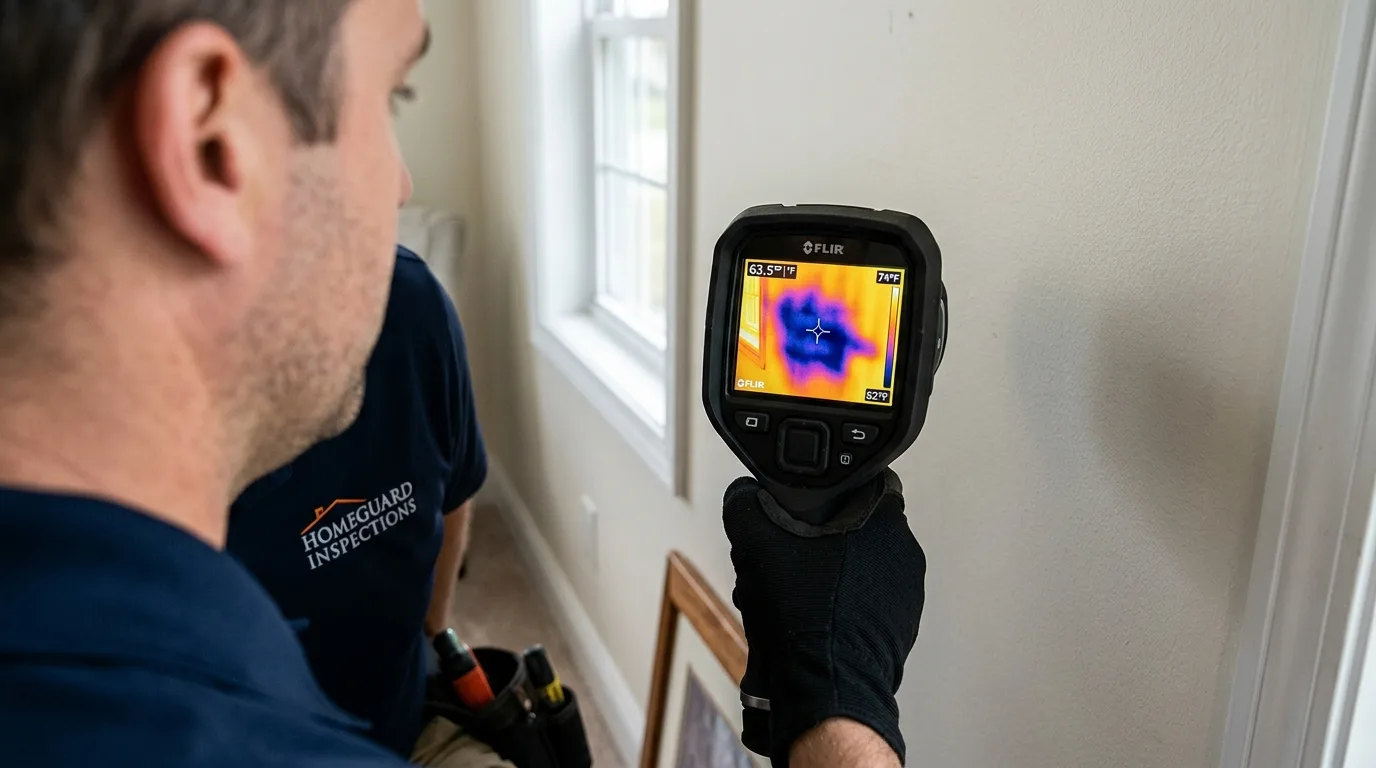
Most homeowners in Duluth discover water damage after it has already caused significant structural harm — because the early signs are subtle and easy to rationalize away. A musty smell in the basement gets attributed to Georgia’s summer humidity. A small ceiling stain gets painted over. A soft spot in the floor gets chalked up to old construction. By the time visible mold or structural failure appears, the damage is far more expensive than it would have been if caught early. This post covers the five most reliable warning signs of hidden water damage in Duluth homes, what each sign typically indicates, and what to do when you spot one.
Suspect Hidden Water Damage in Your Duluth Home?
Our team uses thermal cameras and moisture meters to find what the eye can't see. Call (877) 698-1311.
Sign 1: Musty or Earthy Odor in Specific Rooms or Areas
The human nose detects mold before the eye can see it. Microbial volatile organic compounds (MVOCs) — the gases produced by active mold colonies — have a distinctive musty, earthy, or slightly sweet smell that doesn’t dissipate with normal ventilation. If you notice this odor in a consistent location — a particular corner of the basement, under a staircase, inside a closet on an exterior wall, or in a bathroom — and it returns after you air the space out, that’s a strong indicator of active mold from a hidden moisture source.
In Duluth, this sign most commonly appears in basements where Gwinnett County’s red clay creates chronic low-level foundation seepage, and in crawlspaces where vapor barriers have failed or are absent. The Howell Crossing and Rivermont neighborhoods — with their older housing stock — have a higher incidence of crawlspace mold than newer developments, simply because vapor barriers and crawlspace encapsulation weren’t standard practice when those homes were built.
What to do: Schedule a professional moisture inspection with thermal imaging. The odor source is almost always a wet structural material inside a wall or floor assembly, invisible without instrumentation. Do not attempt mold remediation without first identifying and correcting the moisture source.
Sign 2: Ceiling, Wall, or Floor Staining That Isn’t From a Known Event
Water staining on ceilings, walls, or floors takes distinctive shapes: yellow-brown rings that grow outward from the dampest point, rust-colored streaks running vertically from window frames or penetrations, or gray-black discoloration at wall-to-floor junctions. The critical distinction is between staining from a known past event that was addressed and staining whose origin you can’t identify.
New staining on interior ceilings in Duluth homes most commonly indicates a roof leak, a failed pipe connection above the ceiling, or an HVAC condensate overflow. Staining at wall-to-floor junctions — particularly in basements — typically indicates ongoing foundation seepage. Staining around windows and doors is often driven by failed caulking or weatherstripping that allows rain to penetrate the wall assembly during storms.
What to do: Photograph the stain and note its location relative to plumbing, HVAC, and roof features above it. If the stain is dry and you have no memory of a water event, it may be from a past leak that is now corrected — but it may also be an ongoing slow leak that dries between rain events. A moisture meter reading at the stain location and surrounding area tells you whether moisture is still present in the material.
Sign 3: Soft Spots, Buckling, or Bubbling in Floors and Walls
Structural materials that have been chronically exposed to moisture lose rigidity before they show visible discoloration. A subfloor plywood panel that has been wet repeatedly will develop softness — a spongy feeling underfoot — before you see any staining or smell any mold. Hardwood floors that have absorbed moisture from below will show cupping (edges higher than the center) or crowning (center higher than the edges). Tile floors with softness beneath them — particularly in bathrooms — indicate the cement backer board or subfloor has failed from chronic moisture exposure.
Walls show similar early signs: drywall that has been cyclically wet and dry becomes soft, slightly flexible, or bubbled under the paint. Plaster walls in Duluth’s historic homes may develop hairline cracking that follows a moisture pattern — radiating from a corner where a window or pipe penetration meets the wall assembly.
What to do: Use a screwdriver or penetrating moisture meter to assess the material beneath the surface. A screwdriver that penetrates wood framing with minimal pressure indicates significant wood deterioration from chronic moisture. Never walk on soft subfloor without confirming the framing below hasn’t been compromised — structural failure is a real possibility in advanced cases.
Hidden Water Damage Assessment in Duluth — We Find What You Can't See
Thermal imaging and moisture meters locate hidden damage precisely. Call (877) 698-1311 for a professional inspection.
Sign 4: Peeling Paint or Wallpaper Without an Apparent Cause
Paint and wallpaper bond to their substrates through adhesion that moisture destroys. When water migrates through a wall from inside a cavity, it disrupts the adhesive bond and causes paint to bubble, peel, or crack in patterns that follow the moisture path. Wallpaper develops bubbles, seams lift, and backing becomes visible at the areas where moisture is highest.
The paint and wallpaper clue is particularly useful because it often appears before mold or structural damage becomes advanced. A homeowner in the Berkeley Lake Estates area who notices kitchen paint bubbling consistently on one wall after rainy periods has a wall assembly that is experiencing water intrusion — even if the drywall behind the paint shows no visible mold yet.
What to do: Identify the external boundary closest to the bubbling: is there a window above it, a plumbing fixture on the other side, a roof penetration above? Map the affected area and trace possible water pathways from roof level down. Professional moisture mapping can pinpoint the exact entry point without requiring exploratory demolition.
Sign 5: Unexplained Increase in Your Water Bill
A water bill that increases significantly without a corresponding change in usage — no new appliances, no change in household size, no known outdoor irrigation increase — indicates that water is leaving your supply system somewhere it isn’t supposed to. Hidden supply line leaks inside walls are the primary cause of unexplained bill increases in Duluth homes.
These leaks may be small enough that they don’t produce visible water anywhere in the house — the water is absorbed directly into the surrounding framing and insulation. A supply line that leaks 1 cup of water per day inside a wall may not produce visible staining for months, but it continuously saturates the wall cavity, creating ideal mold conditions and promoting slow wood rot in the framing. By the time visible symptoms appear, the hidden leak may have been ongoing for a year.
What to do: Check your water meter reading, then avoid all water use for 2 hours and read it again. Any change confirms an active leak. Next, turn off every fixture and check whether the meter is moving — movement with all fixtures off confirms the leak is in the supply system. Call a licensed plumber or water damage inspector to locate the leak with pressure testing or acoustic leak detection.
Frequently Asked Questions
How long does hidden water damage go undetected in Duluth homes?
Research on water damage restoration claims suggests that the average hidden leak goes undetected for 1–3 weeks in active cases (where symptoms are present but misidentified) and up to 6–12 months in cases where the leak is inside a wall or crawlspace with no obvious surface symptoms. In Duluth’s summer climate, mold can become established within 2 weeks of a hidden moisture source beginning — which is why professional moisture inspections after any water event, or after unexplained odors or bill increases, are worth scheduling promptly.
Can I use a moisture meter myself to check for hidden water damage?
Consumer moisture meters ($15–$50 at hardware stores) can detect elevated surface moisture in walls and floors. They are useful for confirming that a suspicious area is wet. Their limitation is depth: consumer meters read surface moisture only, not moisture inside a wall assembly. Professional moisture mapping uses pin-type meters, non-invasive meters, and thermal imaging cameras to build a three-dimensional picture of moisture distribution — identifying hidden wet zones that surface meters miss entirely.
Does finding hidden water damage affect my homeowners insurance in Georgia?
The impact on your insurance depends on the cause and timing. Hidden damage from a sudden accidental event (a pipe that broke inside a wall) is typically covered if reported promptly. Long-term hidden leaks may be classified as a maintenance failure and denied, or partially denied. Proactive detection and repair — before a claim becomes necessary — is always the preferred outcome. If hidden damage is covered, thorough documentation from a professional inspection supports the most complete possible claim.
Related: