What to Do Immediately After a Pipe Bursts in Your Duluth Home
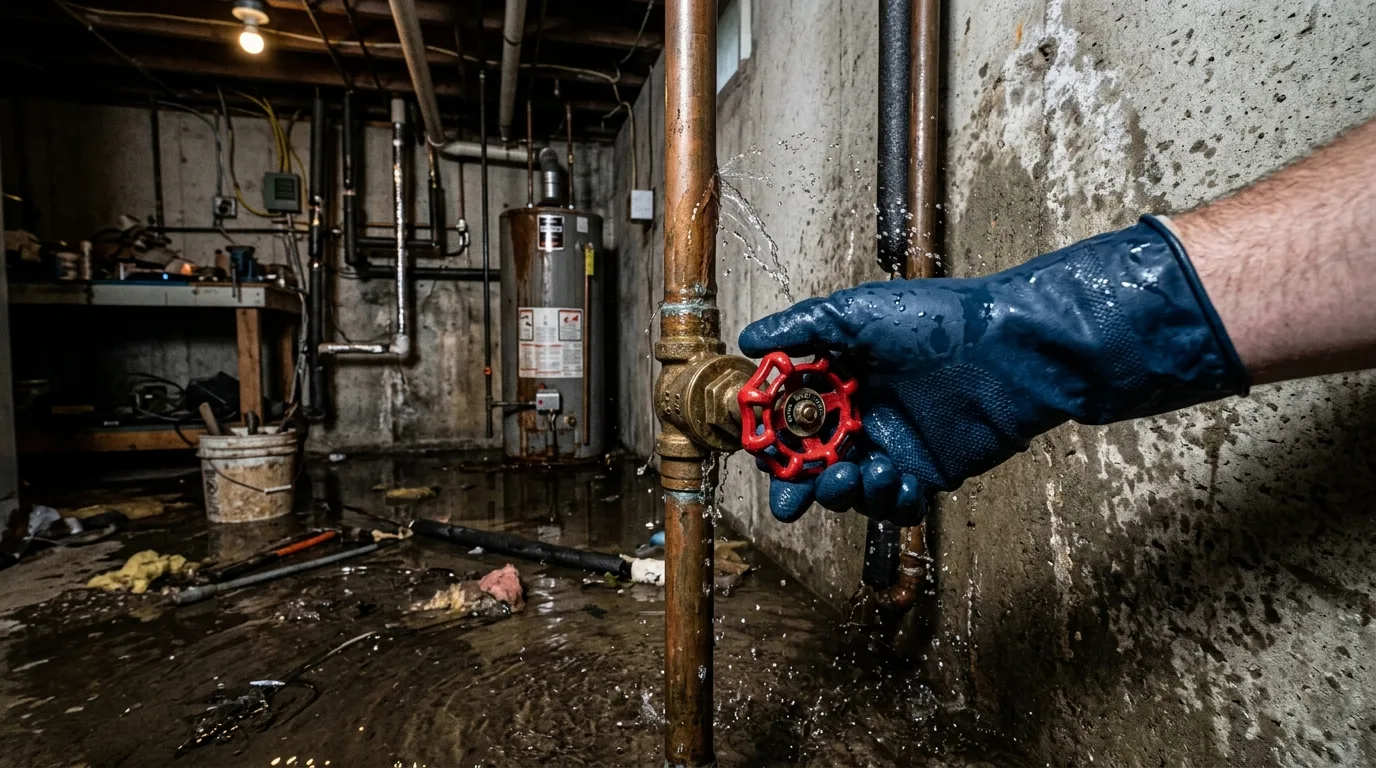
A burst pipe is one of the most disorienting emergencies a Duluth homeowner can face — water is everywhere, you don’t know where it’s coming from, and you’re not sure whether to call a plumber, a restoration company, or your insurance agent. The 30 minutes after a pipe bursts are the most consequential for limiting total damage. This step-by-step guide tells you exactly what to do, in what order, from the moment you discover a burst pipe in your Duluth home until professional help arrives.
Pipe Burst in Duluth? Call (877) 698-1311 Now
We respond 24/7 for emergency water extraction and burst pipe restoration throughout Gwinnett County.
Step 1: Turn Off the Main Water Supply Immediately
This is the most important action you can take, and it needs to happen before anything else. Every second the supply line remains pressurized, more water enters your home. In Gwinnett County homes, the main shutoff is typically located in one of two places:
- At the water meter: Near the street or sidewalk, usually in a covered box flush with the ground. Turning off the meter shutoff requires a water meter key or adjustable wrench. This shutoff stops all water flow to the structure.
- Inside the home: Many Duluth homes have an interior shutoff valve near the front foundation wall, often in a utility area, garage, or crawlspace access point. This shutoff controls everything inside the house but leaves the supply line from the street pressurized.
Use whichever shutoff you can reach faster. If you’ve never located your main shutoff, stop reading this post right now and go find it — before you need it in an emergency.
After the water is off, open faucets throughout the house on the lowest level to drain remaining pressure from the pipes. This reduces the volume of water that continues to flow from the burst location after the supply is closed.
Step 2: Turn Off Electricity in Affected Areas
Water and electricity are a life-threatening combination. Before entering any area where water is on the floor or visibly near electrical outlets, panels, or appliances, go to your electrical panel and turn off the circuits serving those areas. If the panel is in a flooded area or you’re not certain which circuits serve the affected spaces, turn off the main breaker for the entire house.
Do not enter flooded areas until the electricity is confirmed off. If you cannot safely reach your electrical panel, stay out of the flooded space and wait for an electrician or your utility company to disconnect power. Electrocution from flood events kills homeowners annually — don’t treat this step as optional.
Step 3: Call Duluth Water Damage Restoration
Call your restoration company before you call your insurance company. Here’s why: the restoration company documents the scene in real time — photos, moisture readings, water source assessment — during the extraction response. This documentation happens before any cleanup or material movement, creating the most complete possible loss record for your insurance claim. Adjusters rely heavily on this initial documentation in their coverage analysis.
Call (877) 698-1311 — we respond 24/7, dispatch within minutes for Duluth and Gwinnett County addresses, and bring industrial extraction equipment on the first vehicle.
24/7 Burst Pipe Response in Duluth — (877) 698-1311
We document, extract, and dry. One call handles everything from first response through reconstruction.
Step 4: Document Everything Before Anything Is Moved
While waiting for the restoration team to arrive, use your phone to document the scene comprehensively:
- Photograph and video the standing water level in each affected room
- Document the visible source of the burst (if you can identify it safely)
- Photo every affected piece of furniture, flooring, and belonging
- Capture water reaching walls, cabinets, and any visible structural elements
- Record the date and time of discovery in writing
This documentation is legally yours and materially supports your insurance claim. Do not let anyone — including a contractor — begin moving or removing materials until you have captured the scene photographically.
Step 5: Move Valuables to Dry Areas
With electricity off and documentation complete, move high-value items — electronics, documents, photographs, irreplaceable belongings — to dry areas of the home if you can do so safely. Elevate furniture by placing wood blocks or aluminum foil under legs to slow saturation of upholstered pieces. Do not put newspaper or absorbent materials directly on hardwood floors — paper ink can stain and the additional moisture source creates additional drying load.
Do not use household fans or a wet-vac to attempt water removal before the restoration team arrives. Household wet-vacs have limited capacity and force operators to re-enter water that may be electrically live. The extraction capacity of professional equipment is 10–20 times greater than consumer units; waiting the additional 30–60 minutes for professional arrival produces better outcomes than inadequate self-extraction.
Step 6: Call Your Insurance Company
Once you’ve initiated professional restoration and photographed the scene, call your insurance carrier. Have your policy number ready. The key information to communicate:
- Date and time of discovery
- Apparent source of the burst
- Which areas are affected
- That you have already engaged a licensed restoration contractor
Ask the carrier whether the event falls under the sudden and accidental coverage in your policy. Burst pipes in Duluth caused by freezing, unexpected pressure failure, or material fatigue are typically covered events. If the adjuster suggests the damage was from a slow leak rather than a sudden burst, your restoration company’s documentation of the water volume and spread pattern supports the sudden-onset argument.
What Happens After the Restoration Team Arrives
Professional burst pipe restoration in Duluth proceeds in predictable phases:
Phase 1 (first hours): Extraction of all standing water using truck-mounted extractors and commercial wet-vacs. Thermal camera and moisture meter assessment to map the full extent of water migration. Initial scope-of-loss documentation.
Phase 2 (days 1–5): Air movers and commercial dehumidifiers deployed in a calculated configuration based on the affected area, materials, and ambient conditions. Daily moisture readings at multiple structural points. Controlled demolition of materials that cannot be dried in place (typically drywall, carpet, and insulation in contact with water for more than 24–48 hours).
Phase 3 (post-drying): All materials at target moisture content confirmed by calibrated meters. Equipment removed. Scope of reconstruction determined based on what was removed. Reconstruction bid submitted to insurer.
The timeline for burst pipe restoration in Duluth runs approximately 3–7 days for the drying phase, followed by 1–3 weeks for reconstruction depending on scope.
Frequently Asked Questions
Should I call a plumber or a restoration company first after a burst pipe in Duluth?
Call the restoration company first. Many restoration companies have emergency plumbing relationships and can coordinate the pipe repair as part of the response. Even if they don’t, the most urgent need is stopping water extraction — the pipe repair itself can often wait an hour without affecting the total damage outcome once the water supply is off. The restoration company arrives with the equipment and documentation process that starts your insurance claim immediately.
How much will a burst pipe in my Duluth home cost to restore?
Burst pipe restoration in Duluth GA ranges from $5,000 for a contained single-room event caught within the first hour to $70,000 or more for a pipe that ran undetected overnight and saturated multiple floors. The average falls somewhere in the $10,000–$25,000 range for events that are discovered within a few hours. Homeowners insurance covers most sudden burst pipe events — we provide complete documentation to support your claim from the first response call.
How do I prevent pipe bursts in my Duluth home in the future?
The highest-impact prevention steps are insulating supply lines in unconditioned attic and crawlspace areas before winter, knowing your main shutoff location and testing it annually, and setting your thermostat no lower than 55°F even when away from home during Georgia’s December–February cold season. For a complete prevention checklist, read our guide on why winter causes burst pipes in Duluth homes.
Related: