Why Winter Causes Burst Pipes in Duluth Homes — and How to Prevent It
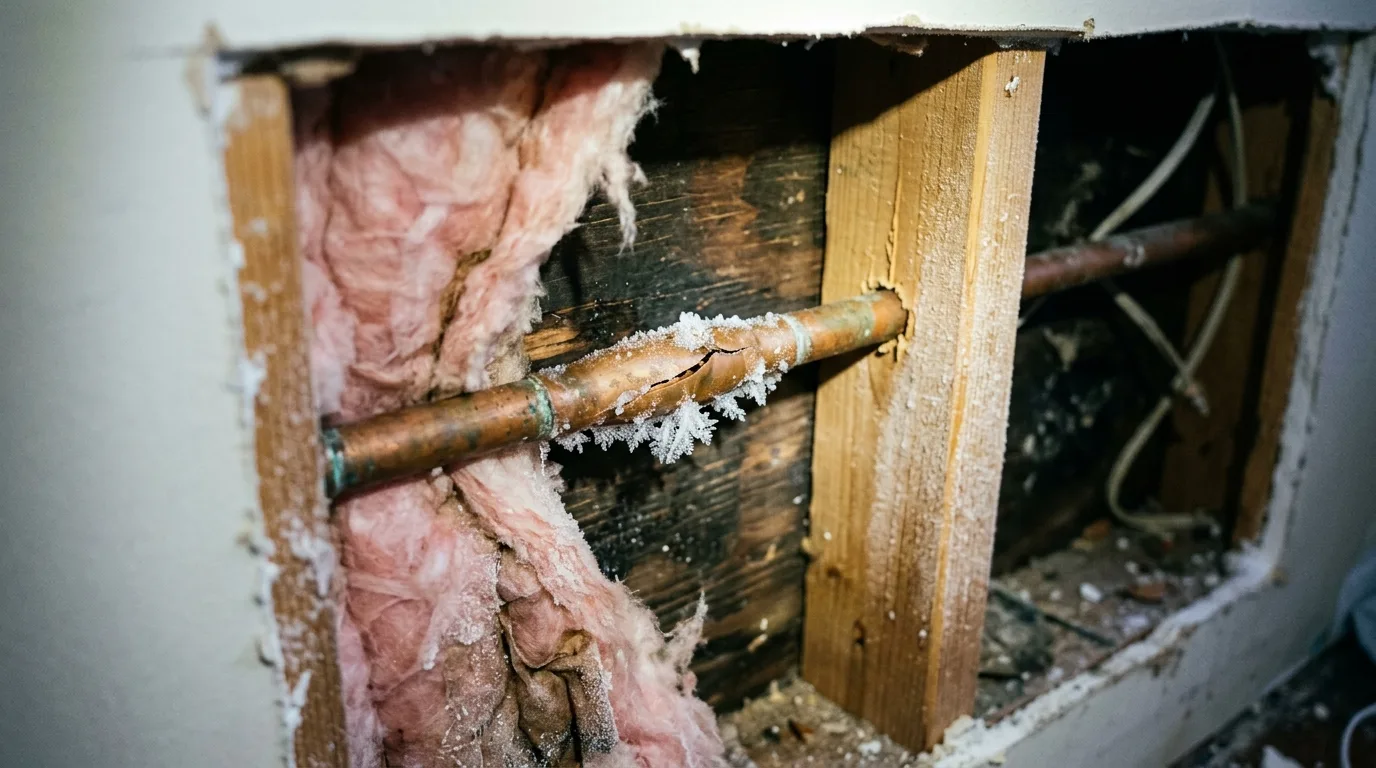
Georgia homeowners don’t usually think of their state as freeze country — but every December through February, Duluth, GA sees a predictable spike in burst pipe calls that surprises residents who moved here from warmer climates. In this post, we cover why Georgia winters are more dangerous for pipes than most homeowners realize, how to identify your highest-risk pipe locations, and exactly what to do the moment a pipe does burst.
Burst Pipe in Duluth? Call (877) 698-1311 Now
We respond 24/7 for emergency water extraction and burst pipe restoration throughout Gwinnett County.
Why Georgia Winters Put Duluth Homes at Risk for Burst Pipes, GA
Duluth averages a winter low of 35°F — warm by northern standards, but that mild average conceals dangerous temperature swings. During cold snaps that push overnight lows below 28°F, any pipe in an unconditioned space freezes solid within hours. What makes Georgia winters particularly hazardous is the speed of the freeze: temperatures often drop from 50°F to 22°F in a single day, giving homeowners almost no warning to prepare.
The underlying physics is straightforward. Water expands 9% in volume as it freezes. Pipe walls — whether copper, PVC, or PEX — cannot accommodate that expansion. The pipe typically doesn’t fail at the ice blockage itself; it fails downstream where pressure builds against the blockage. This means the burst point and the ice blockage are often in different locations, making it harder to predict which pipe will let go. Homes in the Rivermont subdivision and throughout Downtown Duluth are particularly vulnerable because many were built with attic plumbing runs that experience outdoor temperatures when attic ventilation is open.
Where Pipes Most Commonly Burst in Duluth Homes
Understanding your highest-risk pipe locations lets you focus winter preparation efforts where they matter most.
Attic supply lines: In Georgia construction, hot and cold supply lines are frequently run through attic spaces to reach second-floor fixtures. Attics are unconditioned and can reach temperatures well below freezing during cold snaps — even when the living space below feels warm. Burst attic pipes are among the most damaging because water can run for hours before dripping through insulation to the ceiling below.
Exterior walls: Pipes inside exterior walls — particularly on the north-facing sides of a house — are separated from the cold by only the wall insulation, which is often insufficient for sustained freeze events. Water lines in garages, laundry rooms on exterior walls, and kitchen supply lines beneath windows are classic freeze points.
Crawlspace pipes: Homes with crawlspaces in Duluth that lack sufficient insulation around water lines are highly vulnerable. Crawlspaces allow cold air to circulate freely under the floor, and pipes running below first-floor bathrooms and kitchens can freeze during extended cold spells.
Vacation homes and unoccupied properties: Properties that are kept at a low thermostat setting or unheated during owner absence are at the highest risk. The 55°F minimum most professionals recommend for occupied homes is often not maintained in properties left over the holidays.
Practical Steps to Prevent Burst Pipes in Duluth This Winter
- Insulate attic pipes: Use foam pipe insulation rated for your pipe diameter, available at any hardware store. Focus on runs that are exposed and far from living space heat sources.
- Know your main shutoff location: The single most important action in a burst pipe event is shutting off water immediately. Locate your shutoff before winter — it is typically near the water meter at the street, or inside near the front foundation wall.
- Let faucets drip during freeze events: When temperatures are forecast below 28°F, allow cold-water faucets on exterior walls to drip slowly. Moving water is significantly harder to freeze than standing water.
- Keep interior temperature above 55°F: Even when away from home during a cold snap, set the thermostat no lower than 55°F to maintain heat near interior pipe runs.
- Open cabinet doors under sinks: On exterior walls, opening cabinet doors below sinks allows warm air to circulate around under-sink supply lines during sustained freezes.
- Disconnect and drain outdoor hoses: A connected hose traps water in the supply line behind the hose bib, creating a freeze point inside the wall.
How Duluth’s Climate Makes Burst Pipe Damage Worse Than in Colder Climates
Here’s the counterintuitive truth about Georgia burst pipe events: the total water damage is often worse than in states like Minnesota, where freeze events are expected and construction accounts for them. Duluth homeowners in the Howell Crossing area, for instance, often go years without a freeze event that threatens their pipes — until the one year when temperatures plummet and a pipe that was never insulated fails catastrophically.
When a pipe bursts in Duluth’s winter — with the heating system running and indoor humidity low — the water can travel extensively before being noticed. Warm indoor air carries moisture from wet structural materials throughout the house, and Gwinnett County’s clay-heavy soil means crawlspace moisture doesn’t dissipate quickly once the sub-floor assembly is wet. Water mitigation that begins within the first hour consistently costs a fraction of what delayed response requires.
Protect Your Duluth Home — Start With a Free Assessment
We help Duluth homeowners identify pipe freeze risks and respond immediately when burst pipes do occur.
Cost Factors for Burst Pipe Restoration in Duluth
The financial impact of a burst pipe in Duluth GA depends almost entirely on how quickly extraction begins. Restoration costs range from $5,000 for a contained event caught within the first hour to $70,000 or more when a pipe ran overnight and saturated multiple floors. Gwinnett County’s average claim falls somewhere in between — around $2,258–$2,321 for a typical residential water event, though pipe burst jobs are consistently on the higher end of that range.
Homeowners insurance in Georgia covers sudden burst pipe events in most standard policies. The key is having a restoration contractor document the loss immediately — photos, moisture readings, and equipment logs from the first hour make the claims process significantly smoother. If your coverage question is whether the freeze was preventable or negligent, having a documented response timeline from a professional restoration company is your best protection.
Frequently Asked Questions
What temperature causes pipes to burst in Duluth, GA?
Water in pipes typically begins to freeze when pipe-ambient temperature reaches 20°F and sustained freezing conditions continue for 6 hours or more. For Duluth homes, this threshold is most often crossed during the 3–5 coldest nights of the year — typically January cold snaps. Pipes in unconditioned attics and crawlspaces reach outdoor temperature quickly; pipes in heated interior walls take much longer to freeze. The Georgia Piedmont’s thermal mass (red clay soil retains heat) slows crawlspace freezing slightly compared to northern states, but does not prevent it during severe cold snaps.
Does homeowners insurance cover burst pipes in Georgia?
Standard homeowners policies in Georgia cover sudden and accidental discharge from burst pipes — the water damage to your home’s structure and contents. They do not cover the pipe repair itself, which is considered maintenance. If the burst was caused by neglect (such as failing to maintain heat in the home), some carriers may dispute coverage. Document your home’s temperature settings, any preventive steps you took, and the timeline of discovery to support your claim.
How do I find a pipe burst if I can’t see water?
A sudden drop in water pressure, the sound of running water when all fixtures are off, an unexplained spike on your water meter, or warm/soft spots in ceilings or floors are all indicators of a hidden pipe burst. Our team uses thermal cameras to detect temperature differentials in walls and floors that reveal water paths invisible to the naked eye — this technology is how we find moisture that has traveled far beyond the visible wet zone.
Burst Pipe or Freeze Risk in Duluth? Call Now.
Duluth Water Damage Restoration provides 24/7 emergency burst pipe restoration throughout Gwinnett County. Call (877) 698-1311.
Related: