How to Choose a Water Damage Restoration Company in Gwinnett County
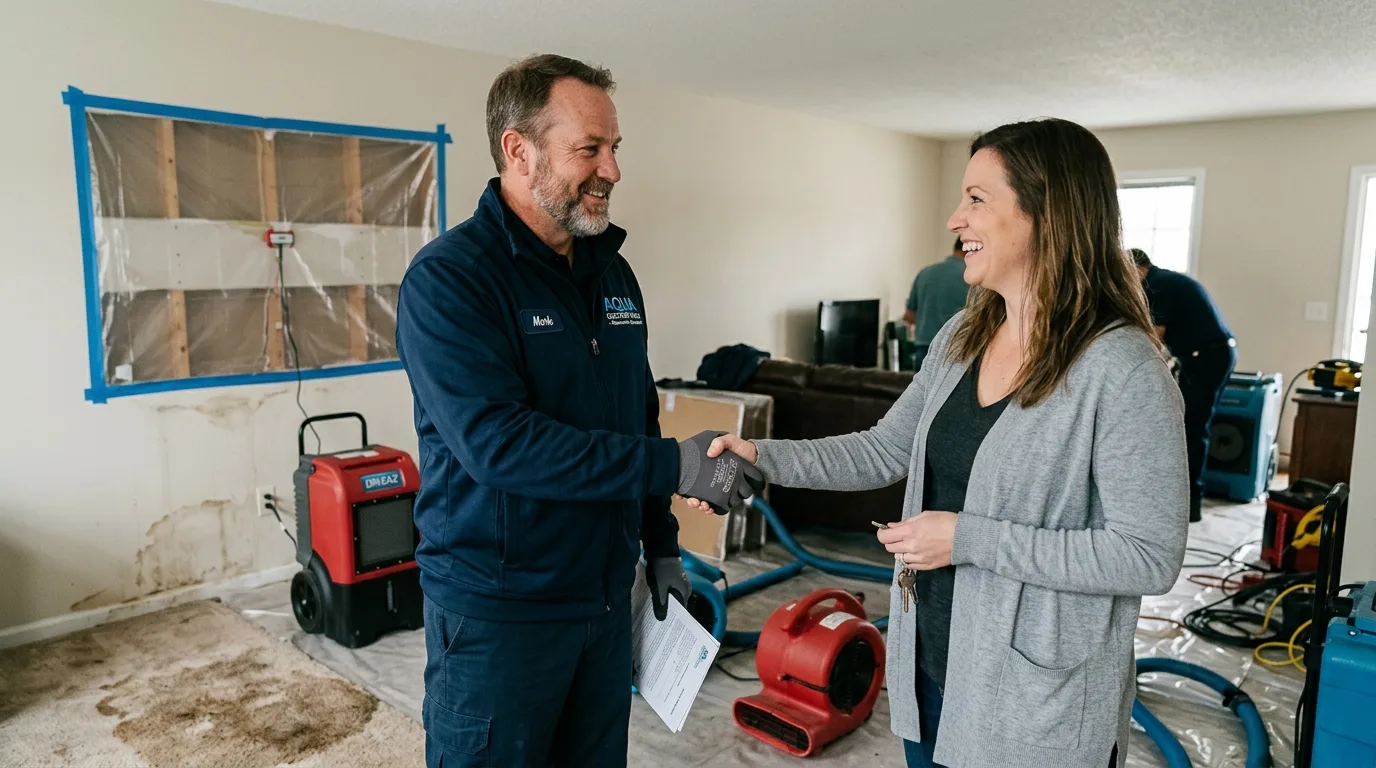
After a water emergency, every minute without extraction increases damage and mold risk — which means you’re under pressure to make a fast decision about which company to call. That pressure is exactly what scam contractors exploit. Gwinnett County has a healthy market of legitimate restoration companies, but the urgency of a water event attracts unqualified operators who collect payment for incomplete work and disappear. This guide gives you a clear framework for quickly vetting any water damage restoration company in the Duluth area, so you can act fast without making a costly mistake.
Trusted Water Damage Restoration in Duluth — (877) 698-1311
IICRC certified, Georgia licensed, and fully documented for every job. We serve Duluth and all of Gwinnett County.
The Non-Negotiable Credentials to Verify
Before hiring any water damage restoration company in Gwinnett County, confirm these credentials:
IICRC certification: The Institute of Inspection, Cleaning and Restoration Certification sets the industry’s technical standards for water damage restoration. The primary credentials are Water Damage Restoration Technician (WRT) and Applied Structural Drying (ASD). Ask for the technician’s certification number and verify it at iicrc.org. Companies that claim IICRC certification without being able to provide verifiable certification numbers are likely misrepresenting themselves.
Georgia state contractor license: Restoration work involving structural repairs, plumbing, or electrical systems in Gwinnett County requires licensed contractors under Georgia state law. Verify any license at the Georgia Secretary of State’s license verification portal. Unlicensed work creates liability for you as the homeowner if the work is later found defective or if an injury occurs on site.
Georgia Department of Agriculture pesticide applicator license: Any company applying antimicrobial or biocide treatments — standard in Category 2 and 3 water events — must hold this license in Georgia. A company performing mold prevention treatments without this license is operating illegally. Ask for the license number; legitimate contractors provide it without hesitation.
General liability insurance and workers’ compensation: Ask for a certificate of insurance naming your address and showing at least $1 million in general liability coverage and active workers’ compensation. A contractor without workers’ compensation puts you at risk for liability if a technician is injured on your property.
What to Ask Before Hiring
These specific questions separate qualified restoration companies from underprepared operators:
“How do you document the drying process?” A qualified contractor will describe daily moisture readings logged at specific points in the structural assembly, psychrometric data (temperature and relative humidity recorded for equipment calculations), and a final moisture verification report. A contractor who says they’ll “check back in a few days” or can’t describe their documentation process is not following IICRC standards.
“How do you determine which materials can be dried in place versus which need to be removed?” The answer should reference moisture content targets for specific materials and the IICRC S500 standard guidelines. Vague answers like “it depends on the damage” without further specifics indicate a technician who is making subjective judgments rather than following documented protocols.
“Who applies the antimicrobial treatment, and what license do they hold?” Especially important for Category 2 or 3 events. The answer should include a specific Georgia Department of Agriculture license number. If the company says antimicrobial treatment isn’t necessary for your event when it clearly is a Category 2 or 3 situation, that’s a serious red flag.
“How do you handle Gwinnett County permit requirements?” A qualified local contractor will know Section 106 requirements, the 2-business-day emergency permit provision, and which types of work require permits. A company that says permits aren’t required for structural repairs is either uninformed or advising you to violate local building code.
Gwinnett County Water Damage — We Meet Every Standard
Duluth Water Damage Restoration: IICRC certified, GA licensed, fully permitted, fully documented. Call (877) 698-1311.
Red Flags to Avoid
Door-to-door solicitation after a storm: Legitimate restoration companies do not canvass neighborhoods after storm events offering discounted services for “leftover equipment.” Storm chasers typically take a significant deposit and perform minimal or poor-quality work.
Cash-only payment requirements: Legitimate businesses accept checks and credit cards. Cash-only requirements often accompany unlicensed operations that cannot establish formal business relationships.
Pressure to sign immediately: Water events are urgent, but a one-hour deadline to sign a contract without the opportunity to verify credentials is a pressure tactic, not a legitimate business practice. A 30-minute credential check before signing is always appropriate.
No written scope of work: Every legitimate restoration contract should describe the scope of work in writing — extraction, drying, material removal, treatments, and reconstruction if included — along with pricing and payment terms. A verbal-only agreement has no legal standing.
Inability to provide proof of insurance: A contractor who hedges on providing a certificate of insurance is not carrying appropriate coverage. Walk away.
Claiming mold inspection and remediation are the same service: Proper mold remediation requires post-remediation clearance testing by a qualified industrial hygienist — typically not the same company that performed the remediation. A company that provides their own clearance testing has a conflict of interest in confirming their own work is complete.
How Duluth-Specific Knowledge Affects Restoration Quality
Not all water damage restoration companies understand the specific conditions of Gwinnett County that affect how restoration work is performed. Companies that primarily work in drier regions may undersize dehumidification equipment for Duluth’s summer humidity levels. Companies unfamiliar with Gwinnett County’s red clay soil may miss the foundation seepage source driving recurring basement flooding in neighborhoods like Berkeley Lake Estates and Howell Crossing.
Local knowledge matters for permit compliance as well — Gwinnett County’s specific emergency permit timeline and the credentials required for antimicrobial application are details that a company unfamiliar with the county may get wrong, creating compliance risks for you. Ask any restoration company you’re evaluating how long they’ve been working in the Duluth and Gwinnett County market specifically.
We serve Duluth, Suwanee, Norcross, Johns Creek, Peachtree Corners, and surrounding Gwinnett County communities with the same certified protocols and documented process on every job. Our technicians understand local soil conditions, seasonal flooding patterns, and permit requirements specific to this area — context that directly affects the quality and completeness of every restoration project.
Frequently Asked Questions
How quickly should a water damage company respond in Gwinnett County?
Professional restoration companies serving Duluth and Gwinnett County should be able to arrive on site within 1–3 hours of an emergency call for most addresses. Response time for initial extraction is the most time-sensitive variable in water damage restoration — every hour increases material saturation and mold risk. A company that cannot commit to a same-day response for active water emergencies is not adequately staffed for the service area.
Can I use any contractor, or does my insurance company pick?
Georgia law gives you the right to choose your own contractor for insurance claim work. Your carrier may recommend a preferred vendor, but you are not required to use them. If you prefer to work with a contractor of your choosing, notify your carrier and ensure your contractor communicates directly with the adjuster. Our team handles all insurance carrier communication and documentation as part of every job.
Should I get multiple quotes for water damage restoration in Duluth?
For emergency situations — active flooding, sewage backup — getting multiple quotes before beginning work costs you extraction time you can’t afford to lose. Call the most credentialed company you can reach immediately. For non-emergency assessment and reconstruction planning, getting 2–3 quotes is appropriate. When comparing quotes, verify that all companies are quoting equivalent scope, equipment standards, and documentation — a low quote that omits documentation or uses residential equipment rather than commercial may produce higher costs later.
Related: