A Guide to Gwinnett County Permits for Emergency Water Damage Repairs
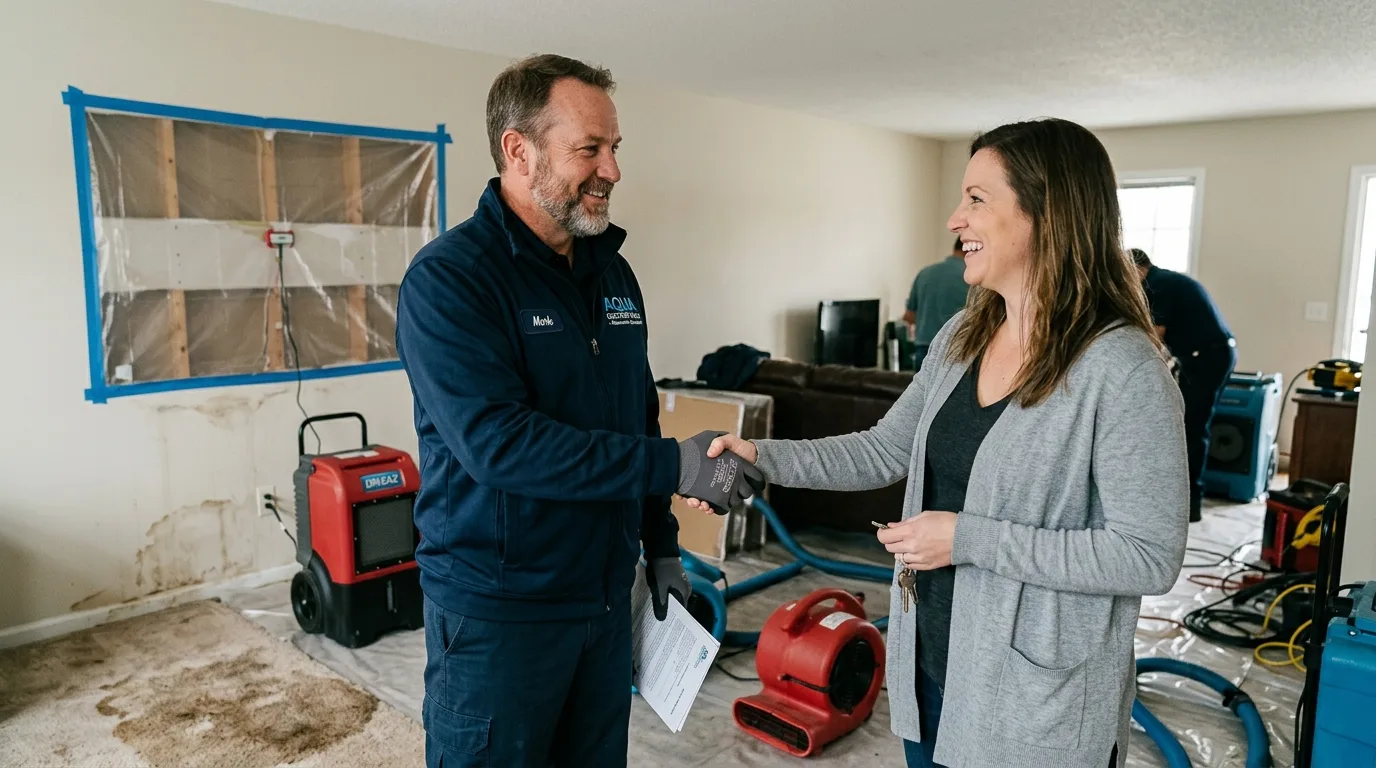
After a water damage emergency in your Duluth home, a permit is probably the last thing on your mind — but in Gwinnett County, permit compliance during restoration isn’t optional, and ignoring it can create serious problems at resale or during future inspections. The good news: the rules are clearer than most homeowners realize, and the emergency provisions in Gwinnett County code are actually homeowner-friendly. This guide covers what requires a permit, what doesn’t, how the emergency permit process works, and why working with a licensed contractor matters for permit compliance.
Water Damage Restoration in Duluth? We Handle Permits
Duluth Water Damage Restoration coordinates all Gwinnett County permit filings as part of our full restoration service. Call (877) 698-1311.
What Gwinnett County Code Says About Water Damage Repairs
Gwinnett County’s building permit requirements fall under the International Building Code with local amendments, administered through the county’s Building and Plan Review department. The core requirement comes from Code Section 106: any owner or authorized agent who intends to “construct, enlarge, alter, repair, remove, demolish, or change the occupancy of a building or structure” must obtain a permit from the building official before commencing work.
For water damage restoration specifically, the following types of work require permits in Gwinnett County:
- Structural repairs to framing, walls, or floor systems damaged by water
- Plumbing repairs or replacements (new pipes, relocated fixtures, replaced supply lines inside walls)
- Electrical repairs or replacements (wiring, outlets, or panels damaged by water contact)
- HVAC work (duct replacement, equipment work necessitated by water damage)
- Any work that involves opening walls for access and then closing them back up
The following types of emergency restoration work are generally exempt from permit requirements under Section 106.4.E:
- Stopping leaks in drain, waste, vent, or supply pipes
- Clearing stoppages in drain or waste lines
- Repairing leaks in pipes, valves, or fixtures that don’t require rearrangement of any piping
- Removing and reinstalling water closets (toilets) without rerouting supply or drain lines
The Emergency Permit Provision: What It Means for Duluth Homeowners
Section 106.4.1 of Gwinnett County’s code specifically addresses emergency situations — which is exactly what water damage events are. Under this provision, a permit application must be submitted within 2 business days of commencing emergency work. This means a restoration contractor can legally begin work immediately to stop ongoing damage — extraction, demolition of wet materials, emergency plumbing repairs — without waiting for permit approval.
In practice, this provision is what allows professional water damage restoration to begin the same day as the emergency rather than waiting 3–5 days for permit processing. The 2-business-day filing requirement is a compliance obligation, not a suggestion. Contractors who perform structural or plumbing work without filing within 2 business days are operating outside Gwinnett County code, which creates liability for the homeowner when the work is discovered during a future inspection or sale.
A legitimate licensed restoration contractor will handle the permit filing automatically — it should be included in your restoration agreement, not an add-on or an afterthought. If a contractor tells you permits aren’t necessary for work that clearly requires them, that’s a significant red flag.
Licensed & Permitted Water Damage Restoration in Duluth
We file all required Gwinnett County permits as standard practice. Call (877) 698-1311 for immediate response.
What Licenses Are Required for Restoration Contractors in Gwinnett County
Gwinnett County requires that contractors performing permitted work hold valid Georgia state licenses. For water damage restoration, the relevant license categories are:
General or residential contractor: Required for structural work — framing repairs, drywall installation, flooring replacement. Georgia requires residential contractors performing work over $2,500 to hold a state license.
Plumbing contractor: Georgia state plumbing license required for any work on water supply or drain/waste/vent systems inside walls. This includes replacing burst supply lines, repairing drain connections, and installing new fixtures.
Electrical contractor: Georgia state electrical license required for any work on electrical systems — replacing damaged wiring, outlets, circuit breakers, or panels.
Georgia Department of Agriculture pesticide applicator license: Required for applying any EPA-registered antimicrobial or biocide treatment — this includes the mold-prevention treatments that are standard after Category 2 or 3 water events.
Ask to see license numbers from any contractor performing work in your home. Georgia license verification is available through the Secretary of State’s license lookup system. An unlicensed contractor performing permitted work in Gwinnett County can result in fines, required demolition of unpermitted work, and difficulty selling the property.
How Permits Affect Homeowners Insurance Claims in Duluth
Permit compliance isn’t just a legal requirement — it directly affects the quality of your insurance recovery. Adjusters in Gwinnett County are familiar with the local permit process, and restoration work performed without required permits may be viewed as improperly completed work by the carrier. More importantly, if unpermitted restoration work is later discovered to have defects — substandard structural repair, plumbing that doesn’t meet code — the carrier may dispute responsibility for those defects.
Proper permits also generate inspection records that document the quality of restoration work. A final inspection sign-off from Gwinnett County building officials is the most authoritative evidence that structural and mechanical repairs meet current building code — evidence that’s valuable both for insurance purposes and for future sale of the property.
Cost Factors for Permitted Water Damage Repairs in Duluth
The average water damage restoration event in Duluth GA costs $2,258–$2,321, with the full range from $1,361 for minor events to $6,270 and beyond for major flooding. Permit fees in Gwinnett County are typically a small percentage of the total job cost — usually $50–$300 for residential restoration permits — but the cost of not pulling permits is potentially much higher: unpermitted work discovered during a home sale can require disclosure, professional remediation, or even demolition and redo.
Homeowners in the Howell Crossing area and throughout Duluth’s older neighborhoods should be aware that pre-existing code violations discovered during restoration — common in older homes — may need to be remediated as part of the permitted scope. This can add cost to the restoration project but is ultimately in the homeowner’s interest, as undisclosed violations are a liability in any real estate transaction.
Frequently Asked Questions
How long does the Gwinnett County emergency permit process take?
The emergency permit provision allows work to begin immediately. The permit application must be submitted within 2 business days of the emergency work commencing. Gwinnett County’s building department then processes the permit on a normal timeline (typically 5–10 business days for residential work) and schedules inspections as the work progresses. Our team handles all communication with the building department so you don’t need to navigate this process during an already stressful situation.
What happens if restoration work is done without permits in Gwinnett County?
Unpermitted work that requires permits is a building code violation. If discovered during a future home inspection or sale, it typically requires either retroactive permitting (if the work can be inspected in place) or demolition and redo at the current homeowner’s expense. Gwinnett County can also issue stop-work orders and fines for active unpermitted work. More practically, unpermitted work that is later found to be defective has no guarantee of coverage by your insurance carrier, since it wasn’t performed to code-compliant standards.
Does the 2-business-day emergency permit rule apply to weekends?
Business days in Gwinnett County are Monday through Friday, excluding county holidays. If a water emergency occurs on a Friday evening, you have until Tuesday end of business to file the permit application. For major restoration projects where work begins over a weekend, our team files on the first available business day. We retain timestamped records of when emergency work commenced so the filing timeline is fully documented.
Related: