Why Duluth's Red Clay Soil Puts Your Basement at Risk for Water Damage
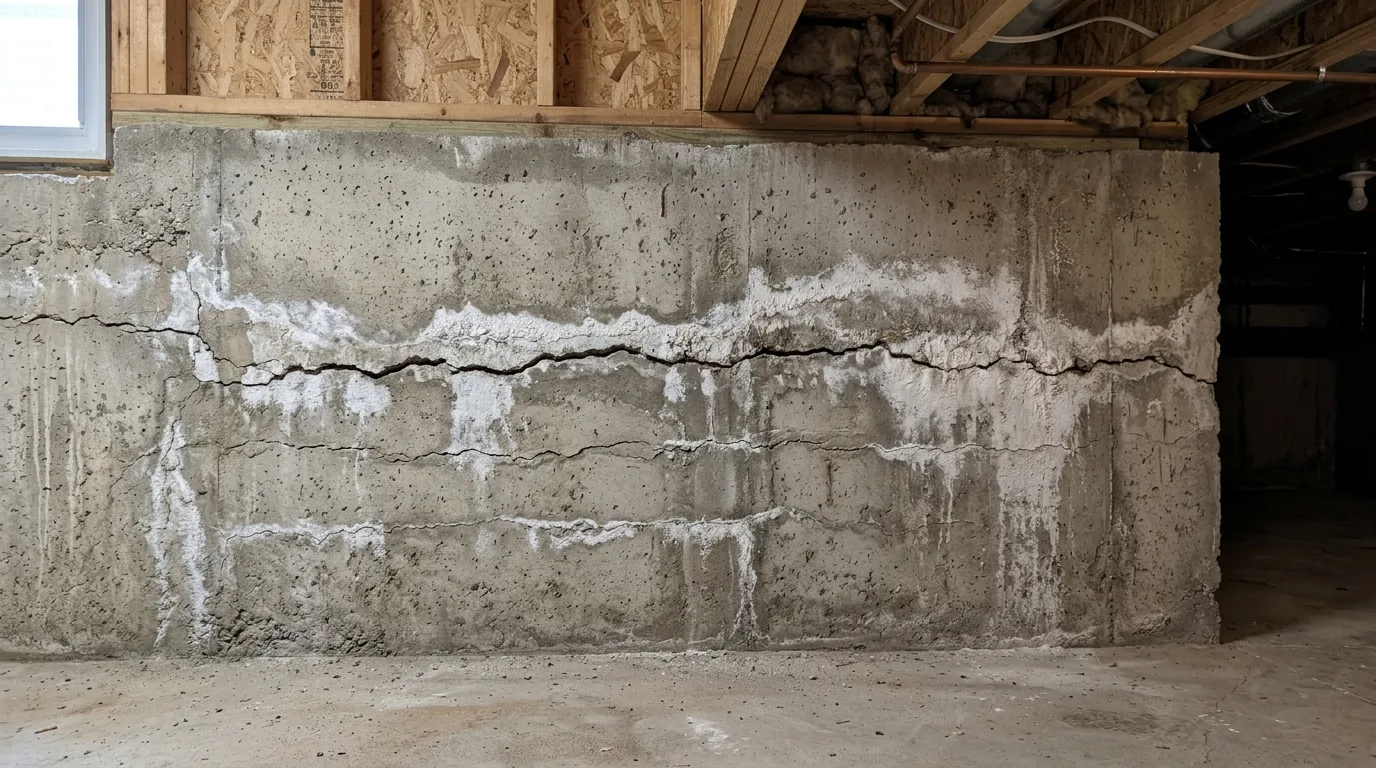
If you’ve had water in your Duluth basement after a heavy rain — even though your neighbors’ basements were dry — Gwinnett County’s red clay soil is almost certainly involved. This isn’t just a local curiosity; it’s a documented soil science phenomenon that has real consequences for foundation integrity and basement flooding rates across Duluth, GA. In this post, we cover the soil science behind Gwinnett County’s flooding problem, what it means for homeowners in specific Duluth neighborhoods, and what you can do to reduce your risk.
Basement Flooding in Duluth? Call (877) 698-1311
We respond immediately for basement water removal throughout Gwinnett County.
The Soil Science Behind Duluth’s Basement Flooding Problem
Gwinnett County’s dominant soil classification is Rhodic Kanhapludult — commonly called “red clay” or “Georgia red clay” — a deep, well-developed soil derived from weathered Piedmont crystalline bedrock. The Gwinnett soil series contains 35–60% clay by weight, and that clay fraction is what creates the basement flooding problem. Unlike sandy soils that drain quickly, Georgia red clay has a permeability rate of only 0.6–2.0 inches per hour. When Duluth receives 2 inches of rain in 45 minutes — a common spring thunderstorm — the soil cannot absorb that water fast enough to prevent saturation.
What happens next is the key to understanding basement flooding in Duluth, GA: saturated red clay surrounding a foundation wall doesn’t just sit there. It exerts hydrostatic pressure — the same physical force that makes dams necessary on reservoirs. The weight of water-saturated clay pressing against your foundation wall creates pressure measured in pounds per square inch. For a typical 8-foot basement wall with 4 feet of saturated clay on the exterior, that pressure can exceed 250 pounds per linear foot. Any crack, gap, or permeable joint in the wall becomes a pathway for water forced inward by that pressure.
How Gwinnett County’s Red Clay Creates Unique Flooding Patterns in Duluth
The flooding patterns driven by red clay hydrostatic pressure are different from pipe-leak flooding in important ways that affect how restoration is approached.
It appears at the base of walls, not from above: Hydrostatic pressure drives water in from the lowest point where the foundation wall meets the floor slab. If you see water appearing along the perimeter seam between your basement floor and wall — rather than dripping from the ceiling — that’s hydrostatic pressure, not a plumbing failure.
It’s more severe during sustained rain than during heavy rain: Two inches of rain in one hour saturates only the top few inches of clay. A slow 2-day rainstorm that drops 4 inches over 48 hours fully saturates the clay profile around the foundation to depth — creating maximum hydrostatic pressure. Homes in the Berkeley Lake Estates area and the older residential sections of Howell Crossing often see their worst basement seepage during multi-day rain events rather than intense thunderstorms.
It can occur during dry periods if the clay expands: Conversely, prolonged drought followed by sudden rainfall causes clay to crack during the dry period (clay contracts significantly when dry) and then swell rapidly when rain arrives. Water enters through the cracks before they can swell shut, producing flooding that appears during the first hours of rain and then stops — leaving homeowners confused about why the basement flooded but shows no ongoing source.
It cycles with the season: Gwinnett County’s 54 inches of annual rainfall, distributed across all seasons, means foundation drainage is tested repeatedly throughout the year. Homes without proper drainage systems experience cumulative crack widening as clay expansion and contraction repeatedly stress the foundation wall over years.
Basement Water Damage Assessment in Duluth
Our team identifies the source of basement intrusion — not just the symptoms. Call (877) 698-1311.
Neighborhoods in Duluth Most Affected by Red Clay Basement Flooding
Downtown Duluth and the historic district: Homes built in Duluth’s historic core — many dating back several decades — were often constructed before modern foundation waterproofing membranes were standard. These foundations are more permeable to hydrostatic pressure than newer concrete systems, and drainage systems installed at the time of construction may no longer function effectively.
Howell Crossing area: This original settlement area of Duluth includes older residential streets where the natural grade favors runoff moving toward foundation walls rather than away from them. Poor lot grading is a force multiplier for hydrostatic pressure — it routes surface runoff directly against the foundation rather than allowing it to dissipate before reaching the foundation zone.
Berkeley Lake Estates and lakeside properties: The proximity of the Berkeley Lake reservoir area creates elevated seasonal water table conditions. Homes near the lake can experience basement water intrusion from below — rising water table pressure — in addition to lateral wall pressure from surface-level clay saturation.
What Dehumidification Demands in Red Clay Flood Events
One characteristic of red-clay-driven basement flooding that homeowners often miss: the water that comes through a foundation wall carries clay particles and minerals that deposit as efflorescence (white mineral staining) on wall surfaces. More importantly, clay-contaminated water classifies as Category 2 (gray water) rather than Category 1 (clean water), which means it requires antimicrobial treatment in addition to extraction and structural drying. The presence of organic material from soil also elevates mold risk compared to a clean pipe leak event.
Water extraction Duluth teams that understand red clay flooding know to check for secondary seepage after an initial extraction — because once the first drainage path is established through a crack, the hydrostatic pressure continues to push water through until the exterior clay dehydrates. Monitoring moisture levels for 24–48 hours post-extraction confirms whether inflow has stopped or whether additional structural intervention is needed.
Cost Factors for Red Clay Basement Flooding in Gwinnett County
Basement water removal in Duluth GA typically costs $500–$10,000+ for residential events, with the red-clay-driven scenarios often on the higher end when Category 2 classification applies. The average water damage restoration cost in the Gwinnett County area runs $2,258–$2,321, but basement flooding jobs involving contaminated water, structural drying of finished basement assemblies, and material removal for antimicrobial treatment regularly exceed that average.
The long-term cost calculus is different from a one-time pipe burst event: if the root cause — hydrostatic pressure from poor foundation drainage — is not addressed, red clay basement flooding typically recurs with every significant rain event. Interior waterproofing systems (French drain channels, sump pump installation, and interior drainage mat) can break the cycle, with residential installations in the Duluth area typically running $3,000–$10,000 depending on basement perimeter and system type.
Frequently Asked Questions
Why does my Duluth basement flood even when my neighbors’ don’t?
Red clay hydrostatic pressure varies based on local grade, the condition of your specific foundation wall, and the drainage capacity of the soil immediately surrounding your foundation. Homes where lot grading directs runoff toward the foundation, where foundation walls have existing cracks or permeable mortar joints, or where the original drainage installation has failed will flood before neighbors on higher ground or with intact waterproofing. A professional moisture inspection identifies the specific pathways water is using to enter your basement.
Can I waterproof my Duluth basement myself?
Surface-applied waterproofing paints and sealants can slow minor moisture infiltration but are not effective against significant hydrostatic pressure. A fully saturated red clay environment can push water through standard hydraulic cement patches over time. For meaningful, lasting protection against Gwinnett County hydrostatic pressure, interior drainage systems or exterior excavation and waterproofing are typically required. We can assess your specific situation and recommend appropriate interventions during our initial inspection.
Does homeowners insurance cover red clay foundation seepage?
Gradual foundation seepage — water that enters slowly over time rather than from a sudden event — is typically not covered under standard Georgia homeowners policies. Sudden flooding events (a single storm causing sudden intrusion) may qualify as a covered loss depending on policy language. Groundwater flooding from water table rise is generally excluded from standard policies; it falls under flood insurance, which is purchased separately. Our documentation helps you understand which portion of your loss may be claimable.
Related: